А вот кстати о "Как я была маленькая". Из повести исключительно тщательно вычищена еврейская тема, ни одного еврейского имени, реалии или упоминания (например, что училище, в котором преподает Верочкина мама, вообще-то еврейское). Но в издании 1961 года (есть минимум 2 редакции, когда-то мы говорили о различиях между ними) описывается, как Верочка держит экзамен в приготовительный класс гимназии, делает ошибку в слове "звезды" ("кто же знал", что они пишутся через ять!) и беспокоится, что ее из-за этого не примут в гимназию. Так вот, не отголосок ли это "более строгих" правил приема и приемных экзаменов для евреев (см., скажем, описание вступительного экзамена у Бруштейн)?..
Of course, we have until Friday before the deal is signed. Given the volatility of the cease-fire thus far, it would hardly be surprising if events interceded between now and then to upset the accord.
Israel and factions of Iran’s Revolutionary Guard (IRGC) are undoubtedly seeking opportunities to play spoiler. An interim deal has already been signed pending the full accord on Friday, but words are wind and the apple cart is still in danger of being overturned.
So why accept this deal now? The White House was faced with no good options. This is only a good deal insofar as it reduces the chances for an immediate resumption of the conflict. This war was not good for the United States; indeed, it placed the US in an actively worse position.
This is not to say that Iran won, exactly, as it suffered dreadful infrastructure damage and severe economic trauma. But the object in war is to obtain a better peace, and a better peace has not been obtained. Iran now has the prospects of gaining more effective tools for achieving an economic recovery than at any point this century.
See me mix that metaphor there? You’re damn right it’s a good mix.
Anyway… I don’t know what to make of all of this, but I’m pretty sure that every member of the Trump administration is more confused right now than I. One point I want to focus on: This is a really bad deal for Israel, and Jerusalem is going to be looking for ways to revise its terms.
Photo Credit: By Student News Agency, Attribution, https://commons.wikimedia.org/w/index.php?curid=135410556
I was discussing Ray Oyler’s career earlier today, as one does (Oyler has the lowest career batting average of any post-1900 player with at least 1,000 at bats), and this naturally reminded me of his appearance in Jim Bouton’s Ball Four, where his nickname of “Oil Can Harry” was explained as a consequence of “always looking like he had just changed a set of rings.” BTW he’s 31 in the above photo, once again illustrating the perennially recurring topic of how much older people used to look. In Oyler’s case I suspect smoking was playing a role, as he died of a heart attack at the age of 43 in 1981. It’s remarkable how when America was healthy middle aged men were dropping dead from heart attacks pretty much on the regular but that’s a topic for another post.
Anyway. . . I have tremendous affection for Ball Four, which I read at the age of 11 after picking it up from a paperback rack in a gas station when my family — my parents and five kids at the time — drove from Ann Arbor to Yellowstone in a 1970 Chevy Impala. We became a party of nine after picking up my mother’s parents in Jackson Hole and driving to Denver. Speaking of Mexicans, we were staying at the Old Faithful Inn and one night as an economizing measure our parents decided to make sandwiches in our rooms (I think we had two) rather than eating in the hotel restaurant. My mother told the older boys — I was the oldest — to stand by the door when the bellboy brought a bucket of ice. We had no idea why she asked us to do this of course so the bellboy (a college student probably) walked right in with the ice. My mother was pretty mad at us, because this gringo was going to think we were a bunch of Mexicans eating sandwiches because we didn’t want to pay for dinner in the hotel restaurant. Even at that tender age I remember thinking that this was a precise description of the situation, but of course I didn’t understand many other aspects of it, such as the fact that my mother came to the USA for the first time in 1949 at the age of 18 to go to the University of Texas, and was shocked to her core by the sight of “white” and “colored” drinking fountains.
Where was I? Ah yes, Ball Four. What a great book that is if you haven’t read it, especially if you’re a baseball fan or a fan of professional sports in general, but even if you’re not, because it’s a fascinating glimpse of one slice of the sociology of American life in 1969, plus Bouton was a really smart and observant guy, and a very good writer as well, although a lot of the latter may have been his editor Leonard Schecter.
Which brings me back to the question which inspired this post, to wit did any LGMer actually see the Seattle Pilots play, either in person or on TV? I checked and they were on the NBC Game of the Week twice during their lone season of existence. Absurdly they never managed to sell their local TV broadcast rights to anybody so they weren’t on local TV, which even as long ago as 1969 was a catastrophically bad thing from the viewpoint of the dollars and the cents, which explains how they got sold after the season for $10 million (!) to Bud Selig in Milwaukee. That’s about $70 million in today’s money but still.
In one of those circle of life things, the only other MLB team to play only one season in their original city were the original Milwaukee Brewers, who were one of the first eight American League teams in 1901, but high-tailed it to St. Louis after the season, where they became the Browns. The Browns eventually became the Baltimore Orioles, which is a story the details of which are complicated and rambling.
To my son Homer… (Homer says Woohoo!) …and his entire family… (D’oh!) …I leave these: a box of mint-condition 1918 liberty-head silver dollars. You see, back in those days, rich men would ride around in Zeppelins, dropping coins on people, and one day I seen J.D. Rockefeller flying by. So I run of the house with a big washtub and… hey! Where are you going? (in the car) Anyway, about my washtub. I’d just used it that morning to wash my turkey, which in those days was known as… (cut to mall) …a walking-bird. We’d always have walking-bird on Thanksgiving, with all the trimmings: cranberries, injun eyes, yams stuffed with gunpowder. Then we’d all watch football, which in those days was called baseball…
Roku UIs (either the sticks or installed TV software) are the only ones that don't make me want to Elvis my the TV.
On Monday Fox announced it would acquire Roku for $160 per share in a cash-and-stock transaction. Fox plans to fund the cash portion of the deal with a combination of cash on hand and new debt. The company said it obtained a $12 billion loan for the transaction.
They want to control the streaming pipes, of course, which is of greater concern than my UI experience.
Inside the White House, Mr. Miller, the influential deputy chief of staff, saw an opening for an idea he had raised previously: What if Mr. Trump simply claimed the power to suspend habeas corpus?
Then the locked-up immigrants would be blocked from receiving hearings or even from seeking court orders to prevent their removal from the country. This was an opportunity for Mr. Trump not only to speed up deportations, but also to assert vastly expanded power over a legal system that was getting in his way.
Suspending habeas corpus was one of two radical ideas Mr. Miller had been pushing that alarmed Mr. Scharf. The other was invoking the Insurrection Act to deploy the military to enforce the law on American streets as protests grew against deportation sweeps.
Mr. Scharf wrote confidential memos to Ms. Wiles on both topics, setting out in a low-key way why taking either step would shatter historical norms and likely precipitate hazardous legal and constitutional battles. A senior administration official, speaking on background because the official was not authorized to discuss the matter publicly, said for this article that “senior staff” had requested the memos, and that they were seen by relatively few people.
But the documents reflected alarm among a small group of senior aides. They felt that Mr. Miller’s eagerness to test the limits of executive power — and to accuse other branches of encroaching on it, echoing a president who bristled at any constraint — risked steering the administration, and the country, in a dangerous direction.
In the case of the Insurrection Act, Vice President JD Vance pushed to invoke it just days after federal agents shot and killed Alex Pretti, a Minnesota critical care nurse who was protesting the administration’s immigration policies.
Remember when free speech in America died because James Bennet was criticized for publishing an op-ed arguing what everybody but him understood it to be arguing? I suspect he was a driving force behind Generalissimo Vance’s stint at the Times as a contributing opinion writer too.
President Donald Trump makes his way to board Air Force One before departing Joint Base Andrews in Maryland on June 15, 2026. | Mandel Ngan/AFP via Getty Images
One should never underestimate President Donald Trump’s ability to use sheer obfuscation to extract “victory” from a situation where the outcome is ambiguous at best. In the days to come, following Sunday’s announcement of a US-Iran ceasefire deal, the Trump administration will undoubtedly face questions about why it was worth killing thousands of people and spending more than $30 billion, not counting the extra costs Americans and people around the world have paid at the gas pump and the supermarket, on a war that succeeded only in reestablishing the prewar status quo: reopening a strait that wasn’t closed before the war, getting Iran to pledge not to build a nuclear weapon — a pledge it has made for decades — and replacing the country’s hardline regime with an ever harder line one.
Trump can claim the US and Israeli bombing campaign set back Iran’s nuclear and missile programs — though just how far set back they are is still unknown without inspectors on the ground — and that unlike Barack Obama, he won’t be sending planes full of cash from the US to Iran. (The money will probably be coming from Dubai instead.)
The deal will likely come under criticism from the Iran hawks who backed the war — some are already expressing concerns — but Trump may not face all that much pushback given how many of his opponents as well as his supporters simply want the war to end.
The bigger problem for the administration is that the agreement leaves so many issues unresolved that it’s far from clear that the war is actually over. And even if it is, we may just be witnessing the setup for future conflicts that keep the United States on an indefinite war footing in the Middle East.
Is the Strait of Hormuz really reopening?
“Ships of the World, start your engines. Let the oil flow!” Trump posted on his Truth Social platform, announcing the deal on Sunday. But Iran’s state media, spinning this deal as hard if not harder than the White House, also claims that the country plans to implement fees on transit through the Strait of Hormuz, contradicting Trump’s claim that the waterway would be “permanently toll free.”
It’s also worth noting that while Trump announced the lifting of the US blockade on Iran, it appears for the moment that Iran will not start implementing the deal until Friday.
That means the strait will not be open for five days — a lifetime in this conflict. Considering that the whole process was nearly derailed on Sunday after Israeli strikes in Lebanon, there’s no reason to assume this is completely finalized yet. Shipping companies and seafarers organizations, not surprisingly, say they need more clarification before they conclude that the Strait is safe for transit again.
Even if Iran does agree to reopen the strait to “toll free” traffic on Friday, the country’s implicit ability to close it again at any time will loom over its negotiations with the US for weeks to come — and beyond. The war has made clear that Iran’s control over the strait is a powerful leverage tool that it is unlikely to give up. The Hormuz genie can’t be put back in the bottle, and the days when free international transit through this crucial global trade chokepoint could be assumed are probably over.
Back to the nuclear drawing board
The deal effectively punts on the main US motivation in the war: eliminating Iran’s nuclear program. While the full text of the agreement has not been released, reporting has suggested that it will begin a 60-day ceasefire period to negotiate a full peace agreement, including a deal on Iran’s nuclear program. Given how long this issue has bedeviled US-Iran relations, a deal to resolve it in two months is a tall order.
The issues on the table include what to do with Iran’s estimated 440-kilogram stockpile of highly enriched uranium. Trump is insisting that what he refers to as “nuclear dust” will be excavated and removed from the country, but Supreme Leader Mojtaba Khamenei has issued a directive against this. The two sides are also still negotiating how long Iran would be prohibited from enriching uranium to lower levels for civilian use, what sort of inspection regime will be in place to make sure Iran is in compliance with any agreement, and the sequencing of when sanctions will be lifted in return for Iran’s compliance.
The differences between the two sides might be bridgeable — but given that the US and Israel have now attacked Iran during ongoing negotiations twice in the past year, trust is low, and Iranian negotiators may feel more emboldened to drive a hard bargain.
The Lebanon question
Trump directed yet another profanity-laden tirade at Israeli Prime Minister Benjamin Netanyahu on Sunday, accusing him of poor judgment, after Israel launched an airstrike on Beirut in retaliation for a Hezbollah drone attack on Northern Israel.
Israel’s ongoing conflict with Iran’s ally Hezbollah in Lebanon may very well be what ends up scuttling this whole process. Pakistani Prime Minister Shehbaz Sharif, in his initial announcement of the deal, made clear that it included military operations in Lebanon, but Israel’s defense minister insisted on Monday that Israeli troops would not withdraw from the Lebanese territory it is occupying.
An outcome of this war that leaves Iran’s regime in place was always going to be a tough sell for Israel, particularly since the US seems to have dropped its demand for curbs on Iran’s ballistic missile program — a much more pressing threat for Israelis than Americans. But it’s hard to see Israel’s government agreeing to an arrangement that (from its perspective) takes away its ability to retaliate against Hezbollah attacks, particularly with Netanyahu heading into a tough reelection fight.
For Trump, the Lebanon issue is an unwanted distraction from his quest to reach an agreement with Iran. But neither Israel nor Iran are likely to let him treat it as a side issue.
The US is staying put in the Middle East
In an interview with the New York Times on Sunday, Trump once again threatened to restart military attacks on Tehran if Iran did not reach a final nuclear deal, but he also went further, suggesting that in the future the US could act as “the guardian of the Middle East” in exchange for 20 percent of the region’s oil revenues.
The idea of the US acting as a paid police force and security guarantor for the region is quite a departure from the foreign policy approach he ran on and his own critiques of his predecessors for getting bogged down in fruitless wars in the region.
Officials say the US military’s force posture in the region will remain unchanged during the next phase of negotiations. It’s possible the US and Iran might muddle through the new ceasefire period, and perhaps extend it a few times, without returning to full-scale hostilities. But as Trump recently said in a revealing joke, a ceasefire in the Middle East can imply shooting “in a more moderate manner.”
Though Trump continues to promise grand bargains to bring peace to the region, he may actually be gearing the US up for a version of Israel’s “mowing the grass” strategy: periodic military interventions to keep its enemies off balance, with no real end in sight. Unlike most Israelis, Americans — including Trump’s supporters — are likely to question why that’s worth their while.
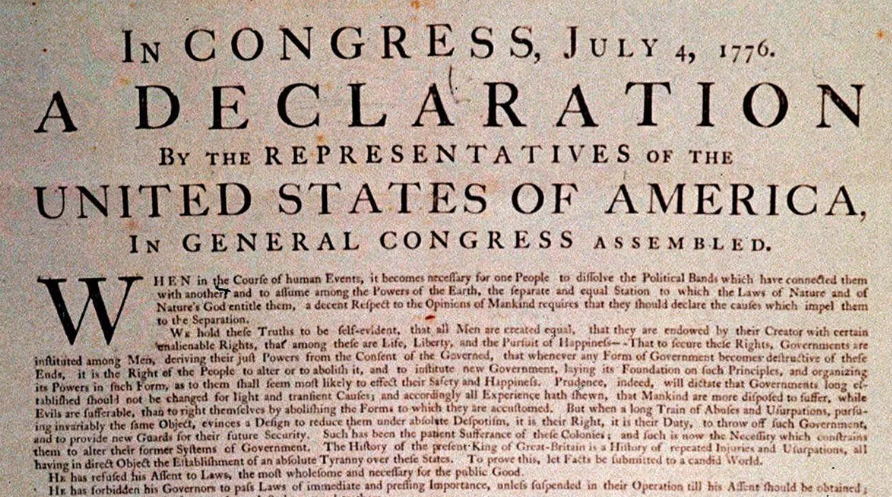
This is a first try at a statement of objectives for a new US government. I have modeled it on the Declaration of Independence and Franklin Delano Roosevelt’s “Four Freedoms” speech. It is about 1250 words, set in general terms. Lists of specific policies can be appended, and I’ll do later posts on what they might include. This is a basis for thinking about those policies and how they might fit together. A document like this can be used in many ways, from behind the scenes to public proclamations. I would like to start a discussion, which I think we need to help us decide on policies and priorities when we take the government back.
**********************
We allowed our practice of democracy to grow rusty, and bad actors took advantage. They stacked the laws so that they could take our money. They are destroying our social safety net – Social Security, healthcare supports, the ability to build walkable cities. They have bought elected officials and intimidated those who cannot be bought. They deploy lies and rumors to divide us so they may rule.
They are restricting the right to vote and putting people outside the rule of law.
They have built a warring state, which ignores law and decency to attack other nations and our own people. They are destroying the public health, education, and scientific foundations that so many built..
Their attacks on immigrants and sexual minorities are unacceptable. If some are not safe in their homes, none are safe.
The Supreme Court has joined the bad actors and supports their cause, ignoring democratic precedent. The lower courts have been more willing to support democracy, but some are corrupted too.
These bad actors are using a person temperamentally inclined to dictatorship along with grotesque interpretations of the Constitution by a corrupt Supreme Court to install autocratic rule. They are using government channels to propagandize the populace.
Equality of People
The Founders declared, within the limits of their worldview, that all people were equal.
We hold these truths to be self-evident, that all men are created equal, that they are endowed by their Creator with certain unalienable Rights, that among these are Life, Liberty and the pursuit of Happiness.
Our history since then has shown the wisdom of this view, if we take “men” in its broadest sense – people. People are women and men, of different skin colors, genders, and sexes, of different religions and other preferences, and different levels of education. All people.
No rights shall be abridged on the basis of inborn qualities. Our history shows that this equality must be the basis for other rights. People living in the United States have these rights.
Rights
We live in a community. Rights exist within a community and must be regulated so that all may exercise those rights to their fullest. We need to negotiate conflicts between individuals and groups regarding rights.
Rights do not exist for the individual in isolation. They are the result of continuing negotiations among individuals and groups. Some individuals and groups have tried to redefine rights so that they may impose their preferences on others.
Franklin Delano Roosevelt summarized the Bill of Rights in Four Freedoms. He said that those rights should extend to the rest of the world.
Freedom of speech and expression
Freedom of every person to worship God in their own way
Freedom from want
Freedom from fear
This is a good framework for discussing our current situation with respect to rights.
Freedom of Speech
The words “freedom of speech” have been used to turn this freedom on its head. The phrase is invoked by those who want the right for themselves but not for others. They condemn open discussion for an infringement on their rights, when it is simply others expressing their freedom of speech. Universities have been damaged by claims invoking this freedom. It has been applied to some groups and not others; in fact, some groups have been subject to law enforcement when they were simply exercising their freedom of speech.
The courts must reject spurious claims about freedom of speech, but before that, individuals must commit to freedom of speech for all and reconciling conflicting claims.
Freedom to Worship
The Founders faced a polity of states and individuals with vastly different views of religion. They recognized, from their experience in Europe, that state imposition of religion brings conflict. Their solution was to prohibit a state religion.
Some people want religious rules to cover their lives from cradle to grave. They are free to make that choice but not to impose it on others. For example, laws requiring businesses to be closed on Sundays were once common, but they have largely been abolished because Sunday is not the day of rest for all religions.
Societal pressure can be uncomfortable, and business competition is part of the reason that Sunday closing laws have been abolished. Adherents may feel that this puts them at a disadvantage, but that is not a reason to allow them to dictate their holy day to others. Recently pressure has increased toward a particular Christian interpretation of experience, and government officials have begun using religious language in their official pronouncements.
Those Christians have argued that they must be allowed to make decisions on the basis of their beliefs for other people. Some pharmacists have argued that they should be able to decide which prescriptions to fill. Business owners would like to reward financially people who adhere to lifestyles they prefer.
All of these desires press toward the institutionalization of religion and must end because they amount to imposition of one religion on those who believe otherwise. All religions, and none at all, must have equal standing before the law. None may be made a religion of the government.
Freedom from Want
Every person is due the means to live a healthy and productive life. The government must make available shelter, food, and healthcare sufficient to allow people to hold jobs and raise families. The government must prepare to support people during natural disasters.
Roosevelt introduced this freedom, appropriate to a fully industrialized society. But the idea that a community cares for its members is much more ancient. Unmet needs ause conflict in a community.
Roosevelt introduced legislation toward guaranteeing freedom from want, which was expanded by later presidents. The Trump administration has removed many protections. Support for food and housing must be restored and increased. Healthcare must be made available to all.
Freedom from Fear
Roosevelt, looking back to World War I on the eve of World War II, framed this freedom in terms of national wars. But fear comes in other ways as well. Internal police forces are terrorizing the population. Fear has been used to prevent people from voting. Elected officials have used fear to motivate their acquisition of power. Fear drives people to acquire firearms, which then cause fear in schoolchildren and their parents, along with anyone who might be the target of a crazed gunman. People fear medical emergencies, both for their disabling effect and for the financial disaster they can incur.
War remains a fear, and nuclear weapons increase that fear. Global commerce can cause fear of losing jobs. We can hardly bear to speak of the fear of climate change, now becoming obvious.
All of these fears must be addressed. Police forces must be made to be servants of the people. Voting must be open to all. Elected officials who misuse their power must be removed. The tyranny of guns must end. Medical care must be available to all.
Foreign policy has been upended. The United States must take assertive measures to assure other nations that it will act responsibly toward them. The nuclear weapons states promised in the Nuclear Nonproliferation Treaty to work toward eliminating nuclear weapons. It is time to act on that. The science of climate change must be restored, and policies must be installed to reduce and eliminate carbon dioxide emissions. In all these areas, the United States lives in community with other nations and must act that way.
The nation has been most prosperous when it has been generous and welcoming. We can do it again.
I am not optimistic that any "deal" will stick - Netanyahu and the insane Iran hawks who still dominate the Professional Republicans of DC will make sure of that even if Trump was in some sense willing.
I am confident that our media will never quite portray that any "deal" will be an absolutely humiliating loss, with the war setting US crass interests back significantly.
Setting back crass US interests significantly is not necessarily bad, depending on your perspective.
Not much of an agreement then (and for other reasons).
Israeli officials said the country is not bound by the U.S.-Iran agreement to end its fight with Hezbollah or to pull its forces out of Lebanon. President Trump, Pakistani mediators and Iran said the deal includes a cessation of hostilities on all fronts, including in Lebanon.
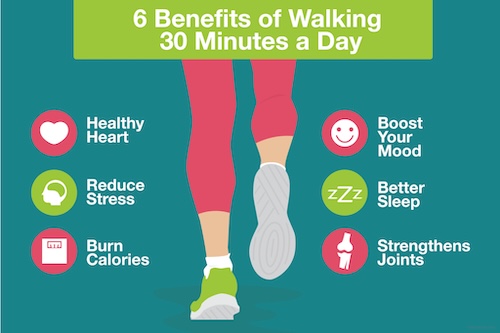
I’m about to attempt a trek from my house to the grocery store and back again, because I want to get back into the habit of regular walks. It’s going to be a little bit of a challenge — I’ve been doing short walks around the house, but I think I can handle a whole kilometer and a half, because maybe I’m getting overconfident.
If I’m not back by noon, call out the helicopters and the search parties. (I also have an ace in the hole: Morris has an informal bus service where you just call and they eventually deliver you right to your door. Don’t worry.)
I’m back, call off the emergency search teams. It took an hour and a half to walk there and back? I’m getting so slow.
We present a morphological description of a recently discovered species of spider in the family Trogloraptoridae from the Columbia River Gorge in northwestern Oregon. The family was previously monotypic (Trogloraptor marchingtoni) and only known from populations near the southwestern Oregon—northern California border. Trogloraptor tulishpun sp. nov. retains the key family synapomorphy, distinctive subsegmented raptorial tarsi, and an oblique membranous division of the basal segment of the anterior lateral spinnerets. Trogloraptor tulishpun is distinguished from T. marchingtoni by its color pattern, clypeal height, vulvar and palp structure. We have found T. tulishpun in four localities in the Columbia River Gorge, which show little mitochondrial sequence divergence from one another, but are highly genetically distinct from T. marchingtoni. Trogloraptor tulishpun is found in basalt features, including lava tubes and shallow talus caves, and has been observed to eat arachnids and moths, making them top predators in these environments.
First, that’s a truly awesome name, Trogloraptor, for a cave spider. Somebody hit a home run with that name.
Naming a new species isn’t a trivial thing, but the lab that found this one went above and beyond to come up with the name Trogloraptor tulishpun. They consulted the local people of the Yakama nation, and got the name “tulishpun” from them. And then they had a formal naming ceremony, as reported on NPR.
ANTHONY WASHINES: At this time, we’ll open this ground, the sacred ground that we’re standing on, and then we’ll begin.
PRICHEP: Naming ceremonies are usually, unsurprisingly, for people. It’s a formal introduction of the name, but it’s also a way to sort of welcome that individual and mark their place in the community.
(SOUNDBITE OF ARCHIVED RECORDING)
WASHINES: You’re being a witness to this brother being acknowledged.
PRICHEP: Anthony Washines is the Yakima elder who came up with the spider’s name.
(SOUNDBITE OF ARCHIVED RECORDING)
WASHINES: And so, from this day forward, we will call them by the name tulishpun. Repeat after me – tulishpun.
UNIDENTIFIED CROWD: Tulishpun.
PRICHEP: Gifts and food were shared, and a traditional naming song was sung. A few spiders were gathered to receive their name and then returned back to the nearby caves. Washines knows people will see tulishpun as a small thing. But he says every creature has its place, and this little spider has been in this place even when his people were not.
WASHINES: We were literally herded to a reservation up in the high-desert plateau, which was not our land. But he stayed here and remained. He still took care of this land.
PRICHEP: Usually, the discovery of a new species is celebrated with a pizza party in the lab, maybe a nod from the dean. It’s an academic milestone. But for tulishpun, it’s a community event, a gathering of scientists and citizens, of human and animal, to name all of those who make up this land and honor the connections between them.
How lovely. I’ll keep that in mind if I ever discover a novel species, which is extremely unlikely. In my background, we didn’t go looking for new species — new mutations and new molecules, sure, and we had ceremonies, usually involving popping a champagne bottle, when a paper was published, but we lack a connection to the community, the people, and the land. A species, though, is something people may have interacted with before, and that interacts with other levels of its biome, and it is appropriate to add a scientific context to a known part of our world.
Donald Trump had his tacky birthday party on the White House lawn yesterday. A bunch of people I never heard of had fights in front of a crowd of rich people who did not get rained on, unfortunately, but they did manage to demonstrate how low-class they were.
Yet if the event was intended as a celebration of American strength and exceptionalism, it also repeatedly descended into something cruder. The most striking example came after prospect Josh Hokit stopped Derrick Lewis in the second round of their heavyweight bout. After exiting the cage to present Trump with a necklace at ringside, Hokit delivered a rambling post-fight interview that veered from praise for the president to religion before concluding with the false conspiracy claim that “Michelle Obama is a man.”
The remark, one of the oldest and most persistent smears directed at the former first lady, drew cheers from some sections of the crowd and bewilderment from others. Even on a night that had already blurred the line between civic ceremony, political rally and pay-per-view entertainment, Hokit still found a way to lower the level of discourse.
Hokit’s comments were not the evening’s only political barb. When former UFC bantamweight champion Sean O’Malley faced Canada’s Aiemann Zahabi, the bout took on a nationalistic fervor. Trump donned a white “USA” hat cageside while chants of “U-S-A!” rang out from sections of the crowd. At various points spectators shouted “Canada is the 51st state!” – echoing Trump’s repeated taunts about annexing America’s northern neighbor – while others urged O’Malley to “eat” his opponent.
He got the party he wanted, but not the party he deserved.
A scan of a brain with Alzheimer’s. | BSIP/UIG via Getty Images
I turned 48 this week, which meant it was time for my annual physical. After the usual battery of questions from my doctor — How much did I drink? Was I exercising? How was I sleeping? — it was my turn to ask a question. I had one prepared: Should I get the shingles vaccine?
Key takeaways
Dementia cases will keep climbing as the population ages — a projected million new US cases annually by 2060 — but your odds of getting it at any given age have been falling for decades. An 80-year-old today is meaningfully less likely to have dementia than one a generation ago.
Across wealthy countries, age-specific dementia rates have dropped roughly 13 percent per decade since the late 1980s, and most of that decline tracks with things we can influence: better-controlled blood pressure and cholesterol, less smoking, more years of school. The brain lives downstream of the heart.
A 2024 Lancet commission estimated that up to 45 percent of dementia could be prevented or delayed by addressing 14 risk factors — and the highest-leverage window is midlife, not old age.
The anti-dementia to-do list: treat your blood pressure and LDL cholesterol, don’t smoke, stay physically active, get your hearing and vision checked, keep learning, and go easy on alcohol. Unglamorous, but it buys time for your brain.
A growing run of studies links the shingles vaccine to lower dementia risk. The evidence isn’t conclusive and the shot is only recommended at 50, but it’s worth a conversation with your doctor.
There is no drug that reverses dementia today. That’s not the same as being helpless.
According to standard medical guidance, the answer would be no. The shingles vaccine is only recommended by the government for people 50 years or older; the only exceptions are adults whose immune systems are weakened by disease or treatment. And despite the way my back feels when I get out of bed each morning, I wasn’t there quite yet. Our immune systems weaken as we age, but at 48, I was probably still capable of beating back the varicella-zoster virus that causes shingles (and chickenpox).
And yet my doctor was open to the idea for the same reason that I was asking about it: because there is early but growing evidence that the shingles vaccine may be protective against neurodegenerative diseases like dementia. For someone my age, with more time behind me than in front of me, the possibility of developing those diseases — and the desire to do anything to prevent them — is suddenly looming large.
I’m far from alone. Dementia already afflicts more than 6 million Americans today, and a 2025 study in Nature Medicine estimated that the lifetime risk of developing dementia after age 55 is 42 percent, with higher figures for women, Black adults, and those who carry the APOE ε4 allele genetic variant, which is known to increase the risk for Alzheimer’s. That same study projected new US cases of dementia would double by 2060, from 514,000 a year in 2020 to more than 1 million annually, due largely to population aging.
Behind those figures is a universe of suffering. Nearly everyone reading this has watched, or will watch, someone they love succumb to dementia. And once you get to my side of your 40s, that risk starts to feel less abstract and a lot more personal.
Yet the frightening story of the rise in dementia cases as the US population ages obscures real progress that is already being made to prevent it — and the even greater progress that could follow. Dementia may feel inevitable, a cruel side effect of longer life. But it doesn’t have to be.
Dementia epidemiology 101
The Nature study is about incidence — new cases, not the total number of people living with dementia. Separate CDC estimates project nearly 14 million older Americans living with Alzheimer’s disease, the most common form of dementia, by 2060.
But the rate hasn’t been holding steady — it’s been dropping. A 2020 study that drew on data from six countries across Europe and North America found that age-specific dementia incidence for people of European ancestry had fallen about 13 percent per decade since the late 1980s, and around 16 percent per decade for clinical Alzheimer’s. A 2016 study tracked five-year dementia rates across four periods between the late 1970s and the early 2000s and found them steadily falling, ultimately dropping 44 percent by the most recent period. The authors of the 2020 study project that if the decline in incidence remains steady in the future, 15 million fewer people might develop dementia by 2040 across high-income countries than if the incidence of the disease remained unchanged.
That good news may not be shared by everyone. The 2016 study found that the decline only showed up among people with at least a high school diploma — more on that below — and even then, it wasn’t evenly shared. And the sheer increase in older people means that a continually dropping incidence only blunts the coming dementia wave, rather than blocking it. One study of older adults in England actually found dementia incidence falling through 2008 and then creeping back up; the researchers also found that when you account for the fact that people headed toward dementia tend to die earlier, the drop gets much harder to see. What’s fallen before can rise again.
But what this likely means in practice is that a person turning 80 today is meaningfully less likely to have dementia than a person who turned 80 a generation ago. And it’s reasonable to hope the same will hold for whoever turns 80 next — like, say, me.
The question, though, is why.
How we learned to fight dementia without realizing it
Here’s a veteran health journalist tip: if anyone ever asks you why something is improving in public health, just attribute it to the decline in smoking. There’s a decent chance you’ll be right.
While Alzheimer’s is a brain disease, and dementia is the umbrella term for several kinds of cognitive decline, there is a growing consensus that they are deeply driven by vascular health — meaning what damages your heart and blood vessels is ultimately what damages your mind. Thanks to the development of blood pressure and cholesterol-lowering medicines, better heart disease and stroke management, and perhaps most of all, drastic reductions in smoking, cardiovascular health has been improving. Even with the rise of obesity and diabetes, most vascular risk factors have decreased over the same time that dementia and Alzheimer’s prevalence fell.
The rise in education over the same time period may play a role as well. Americans turning 80 today went to school during a great mid-century expansion in education, while their parents were schooled — or rather, not schooled — in the 1920s and ’30s. In 1940, only 24.5 percent of Americans 25 and older had a high school diploma, and just 4.6 percent had completed a bachelor’s degree or more. By 2017, high school completion had reached 90 percent, and the share of people with a bachelor’s or more had hit 34 percent. And researchers have correlated higher education attainment with lower dementia and Alzheimer’s rates.
Now repeat after me: correlation is not causation. Researchers don’t really know why more years of schooling seem to be associated with a lower risk of dementia, though there are theories that education might boost the brain’s “cognitive reserve.” But the hopeful take is that the decline in incidence is largely driven by behaviors and life conditions we can change. And one of the most unexpected and promising acts is something as simple as routine vaccination.
The vaccine you need to know about
Last April, I wrote about what I called “one of the brightest spots in an otherwise dark field”: a study in Wales that found that older adults who received a vaccine against shingles were 20 percent less likely to develop dementia in the seven years following vaccination than those who did not receive it. It wasn’t a randomized trial, but it was stronger than the usual observational association: the study harnessed a natural experiment in Wales, where vaccine eligibility turned on a birthday cutoff, meaning it was less likely that the results were because vaccinated people were simply healthier.
Earlier this year, a study in Canada looked at hundreds of thousands of people over the age of 70 and, like the Welsh study, found that those who had taken the shingles vaccine were less likely to develop dementia. And a new analysis from late 2025 of the data in the Welsh study found that the vaccine was associated with benefits that went beyond prevention — it also seemed to slow the disease for those with dementia and reduced deaths attributable to it.
The shingles vaccine in the Welsh study was an older, live-virus version; the current vaccine is a newer recombinant form that can’t accidentally cause shingles, and another study found it was associated with even greater protection from dementia.
These findings are promising but still leave plenty of questions. The Welsh live-vaccine study found a larger apparent benefit in women, who also suffer higher rates of dementia. But the pattern is not settled: the newer recombinant-vaccine study found an association in both men and women, though stronger in women. Shingles may be connected to dementia, though the evidence is still messy: A large 2025 health-records study found recurrent shingles was associated with a modestly higher dementia risk than a single episode, while earlier evidence has been more mixed.
Shingles occurs when the dormant varicella zoster virus — the same virus that causes chickenpox — reactivates. It’s possible that the resulting neural inflammation may feed dementia. A randomized controlled trial published in December tested a related herpes-virus idea, treating 120 adults with early Alzheimer’s or mild cognitive impairment — all with evidence of prior herpes simplex infection — with a medication called valacyclovir. After 18 months, researchers found no significant advantage over a placebo, dampening hopes that herpes antivirals could be an effective Alzheimer’s treatment.
That’s a real strike against the simplest version of the theory that the virus itself is rotting the brain. But it could mean that the shingles vaccine’s possible protective effects don’t come from shingles at all. A 2025 study found that the newer shingles vaccine and an RSV vaccine that share the same AS01 immune-boosting adjuvant were each associated with lower 18-month dementia risk compared with flu vaccination, and researchers did not find a statistically significant difference between the two AS01 vaccines. The implication is that the benefit might come from giving an aging immune system a jolt, rather than from any one bug it’s aimed at.
You can protect yourself
But as the vaccine science sorts itself out, there are lifestyle changes you can make to help protect yourself without getting a shot. A 2024 Lancet commission found that, in principle, up to 45 percent of dementia cases could be prevented or delayed by addressing 14 risk factors, including not smoking; lowering high LDL cholesterol in midlife; treating hearing loss, especially from midlife on; and limiting obesity. The key period here is midlife, which the commission defined (rather widely in my opinion) as 18-65. Which, for someone my age, means there’s no better time to focus on prevention.
I don’t know whether I’ll go ahead and try to get the shingles vaccine early, and to be clear, I’m not telling anyone they should. The science is still uncertain, and I am, obviously, not a medical doctor. But the lifestyle factors that have been shown to protect against dementia — which are largely the same ones that help cardiovascular health — can be adopted by everyone, for their health now and in the future.
No one knows for sure what the future holds, for me or for you. What’s certain is that, barring a medical miracle, the sheer number of dementia cases will continue to rise as our population ages, and that some of us will be in that number. But that doesn’t mean we’re helpless.
A version of this story originally appeared in the Good News newsletter. Sign up here!
This “peace deal” appears to be nothing of the sort, but rather more of a publicity stunt so that Donald Trump could get a very special birthday present that he received because he’s ended eleven wars and deserves the precious Nobel, yes we must have it, gollum.
Specifically, it:
(1) Resolves none of the difficult issues related to Iran’s nuclear development program or its support for Hezbollah.
(2) Does not include any agreement on the part of either Israel or Hezbollah regarding the ongoing fighting in Lebanon.
(3) Keeps a now-strengthened Iranian regime in place indefinitely, the survival of which illustrates the fundamental impotence of all of Donald Trump’s and Pete Hegseth’s big beautiful bombs.
I’m extremely skeptical about whether this cease fire will hold for any sustained period, let alone lead to a comprehensive actual peace deal, but it buys Donald Trump some characteristically credulous headlines and a good stock market opening, which is to say that the American political system fails the marshmallow test. Again.
Daniel recently started a new job. His first task was to fetch some data from the database and render it to the user. Easy enough, and there were already wrapper functions around the database to make it easy. He called execute_read, passed it a query, and checked the results.
There were no results. But the query definitely should have returned results. What was going on?
defexecute_read(conn, query, params, only_one=False):
result = None
cursor = Nonetry:
start_time = time.time()
cursor = conn.cursor()
cursor.execute(query, params)
if only_one:
result = cursor.fetchone()
else:
result = cursor.fetchall()
end_time = time.time()
time_taken = end_time - start_time
if env.is_production():
if time_taken > 0.4:
logger.critical("long query", query=query, time_taken=time_taken)
else:
if time_taken > 0.2:
logger.warning("long query", query=query, time_taken=time_taken)
except Exception as err: # pragma: no cover
logger.exception("execute_read exception", exception_msg=err, query=query)
finally:
logger.debug("execute_read debug", query=query, params=params, only_one=only_one)
ifnot result:
if only_one:
result = {}
else:
result = []
if cursor:
cursor.close()
return result
There are a lot of things I don't like about this function. The only_one parameter, for starters. Note how the database library actually breaks that behavior out as different functions- that's a much more appropriate model, especially since you have wildly different return types depending on how that flag is set.
Similarly, checking env.is_production() to check a timing threshold is itself pretty awful. I can sympathize with wanting different timing constraints based on what environment you're in- but if that's the case, the timing constraint is the parameter. env.long_query_threshold should be the configuration parameter. Also, your database should be able to alert you to these kinds of things, so that it doesn't live in your code anyway.
But the WTF here is the promiscuous exception handler, which catches all errors and simply logs them. This created a situation where Daniel sent a query to the database and got no results. He didn't go straight to the logs and tried to debug it more directly, so it took him quite some time to find the execute_read exception log line which told him what was wrong: his SQL query had a syntax error.
Daniel writes: "I can't imagine the disaster that this causes if there's a network hiccup in production." Failing silently and returning empty results sets definitely is inviting a lot of confusion.
[Advertisement]
Keep all your packages and Docker containers in one place, scan for vulnerabilities, and control who can access different feeds. ProGet installs in minutes and has a powerful free version with a lot of great features that you can upgrade when ready.Learn more.
![[personal profile]](https://www.dreamwidth.org/img/silk/identity/user.png) silent_gluk
silent_gluk
![[syndicated profile]](https://www.dreamwidth.org/img/silk/identity/feed.png)






 [Advertisement]
Keep all your packages and Docker containers in one place, scan for vulnerabilities, and control who can access different feeds. ProGet installs in minutes and has a powerful free version with a lot of great features that you can upgrade when ready.
[Advertisement]
Keep all your packages and Docker containers in one place, scan for vulnerabilities, and control who can access different feeds. ProGet installs in minutes and has a powerful free version with a lot of great features that you can upgrade when ready.